Leprosy
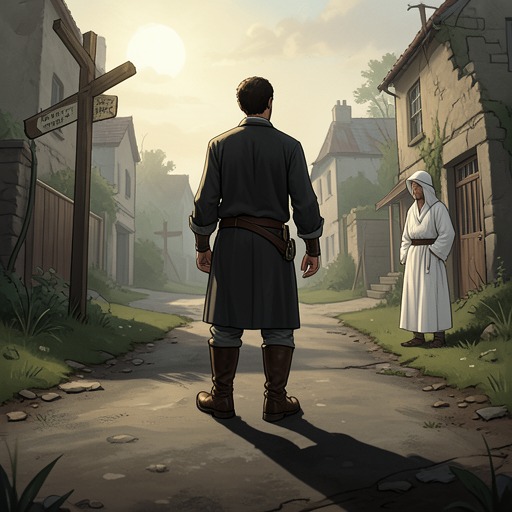
Don't Leave God Alone: How to Get God's Attention, Remain in His Presence, and Even Change His Mind to Make a Difference in Your WorldLeprosy functions in the book both as a severe bodily condition and as a social position marked by isolation, diminished options, and proximity to death. Its clearest narrative appearance is the account of four leprous men sitting outside a city during a famine: their condition has left them on the margins, yet their shared recognition that remaining where they are means death becomes the beginning of movement toward change.
Condition and Social Position
Leprosy is not described through a medical history of the four men, but through the circumstances it produces. They sit outside the city gate rather than participating in ordinary communal life, and the famine has made their exclusion still more dangerous. The city offers no security, while their present location offers no food; bodily affliction and public crisis combine to leave them with almost no safe choice.
The narrative therefore treats leprosy as more than an individual diagnosis. It places the men in a condition where they must calculate survival from the edge of society. Their physical state, the famine, and the threat of death narrow their possibilities, but do not eliminate their capacity to decide. The story’s emphasis falls not on a cure described in medical terms, but on the moment when marginalized people refuse to remain motionless.
The Decision Outside the City
The four men ask, "Why sit we here until we die?" Their question names the central tension attached to their condition: waiting appears safer than action, but in reality it guarantees the same end. They reason that entering the city may result in death because of the famine, while staying where they are will also end in death because there is nothing there for them. The argument does not promise success; it identifies movement as the only remaining possibility.
They choose to approach the camp of the Syrians, accepting the danger that they might be killed. Their decision is consequently neither a claim that risk has vanished nor an assurance that the afflicted have become powerful. It is a deliberate rejection of passive despair. Leprosy has placed them outside the ordinary routes to help, but their willingness to move changes the meaning of their marginal position: the place of exclusion becomes the starting point of advance.
From Stagnation to Change
The book uses the four men as an example of change beginning with attitude and effort. They could have concluded that nothing was worth attempting, yet they choose to get up and move forward. Their action is paired with the account of blind Bartimaeus, who also refuses to remain in the same condition or location when others try to silence his cry. In both cases, transformation begins before the final outcome is visible, with a decision to stop accepting the present situation as permanent.
This comparison makes leprosy part of a wider spiritual pattern in the book. The men do not change by continuing to sit and reason within the limits of their current circumstances; they move toward an uncertain possibility. The narrative presents determination as the bridge between desperate limitation and an altered future, while preserving the concrete fact that the men act because every available option appears dangerous.
Medical Crisis and the Book’s Healing Framework
The leprous men’s story is placed within a book that repeatedly describes serious bodily crises through prayer, prophetic speech, and collective persistence. A newborn girl suffers from an incurable disease attacking her liver and blood; doctors report that her chance of living is only 11 percent, and the church continues praying while her condition worsens. In another account, a man’s ruptured bowel produces septic shock, a medical coma, a fever of 105 degrees, and multiple organ and renal failure, requiring dialysis and a ventilator.
The author also recalls a prolonged cough that worsened despite repeated medical visits and different pills. He and Brenda Kunneman respond by opening their Bibles, speaking God’s Word over the condition, and commanding the coughing to stop in Jesus's name; the account says that victory came after persistent pursuit of healing. Likewise, the woman with the issue of blood is described as having spent all she had on physicians and being "nothing bettered, but rather grew worse" before reaching toward Jesus.
These episodes reveal the book’s consistent interpretive framework: disease and bodily danger are treated as occasions for sustained prayer rather than as reasons to abandon hope. That framework gives the leprous men’s choice its larger significance. Their movement is not presented as a medical treatment for leprosy, and the text does not supply a clinical account of their condition; instead, their story illustrates the book’s insistence that worsening circumstances should provoke determined engagement with God rather than resignation.
Narrative and Thematic Significance
Leprosy concentrates several of the book’s recurring concerns in one brief scene: exclusion, famine, fear, limited choices, and the necessity of action. The four men stand in contrast to a spirituality that waits passively for circumstances to improve. Their question breaks the stillness of the scene, and their decision converts awareness of death into a reason to move.
The condition thus operates as a concrete image of a life trapped at the margins, but the narrative does not end its meaning there. By linking the men with Bartimaeus and with accounts of severe illness, the book makes bodily vulnerability part of a repeated testimony about persistence. Leprosy signifies a desperate condition, yet the men’s refusal to remain seated gives that condition a narrative reversal: those who appear to have the fewest options become the ones who take the first step toward a new day.